
Focus? In This Economy?
The salient point of today's discourse centers on the intricate dynamics of focus, particularly within the context of neurodivergence in an increasingly chaotic environment. We delve into the challenges that individuals, especially those with ADHD, encounter when attempting to maintain attention amidst overwhelming cognitive loads and emotional interferences. Our conversation underscores that feelings of inadequacy often stem from societal expectations and personal experiences, particularly for those from marginalized backgrounds. We illuminate the necessity of structured support systems to aid neurodivergent individuals in navigating their unique challenges while fostering a sense of worth and belonging. Ultimately, this episode serves as a poignant reminder that the struggle for focus is not borne in isolation; rather, it is a shared human experience that demands understanding, empathy, and community.
Summary
In this episode, the host discusses the challenges of maintaining focus in today's fast-paced world, particularly for individuals with ADHD. The conversation delves into personal experiences with ADHD, the emotional and cognitive challenges faced, and the impact of cultural expectations on neurodivergent individuals. The guest, Crystal Morgan, shares her journey with ADHD, highlighting the importance of understanding, support, and the intersectionality of identity and mental health.
Takeaways:
- The podcast provides a deep exploration into the challenges of executive functioning, particularly for neurodivergent individuals.
- Listeners are reminded that they are not alone in their struggles with focus, as many face similar challenges.
- The conversation highlights the influence of cultural backgrounds on perceptions of behavior in individuals with ADHD.
- Strategies for coping with executive dysfunction, such as externalizing tasks through writing and using planners, are discussed.
- The impact of emotional interference on cognitive load is articulated, emphasizing the difficulty of maintaining focus under stress.
- The episode underscores the importance of support systems and the value of shared experiences among those with neurodivergent conditions.
Krystal Morgan
Krystal Morgan is a certified neuroscience-based life coach with a master’s in counseling. With more than a decade of experience, she blends neuroscience, ADHD knowledge, and positive psychology to help people build confidence, overcome barriers, and create a life that feels authentic and aligned. Her mission is to help clients make their purpose and goals “Krystal clear.”Growing up with ADHD and other challenges, I know firsthand what it's like to feel stuck and inadequate. It was my own personal journey that led me to pursue a master's degree in counseling, where I discovered a genuine passion for empowering others. I learned that with the right mindset and a willingness to put in the work, we can overcome any obstacle. My experience taught me the power of connecting with people, listening to their stories, and sharing the tools they need to find their own path. This passion led me to coaching and to earning certifications in Neuroscience, ADHD, Education, and Positive Psychology.
Transcript
Hey everyone.
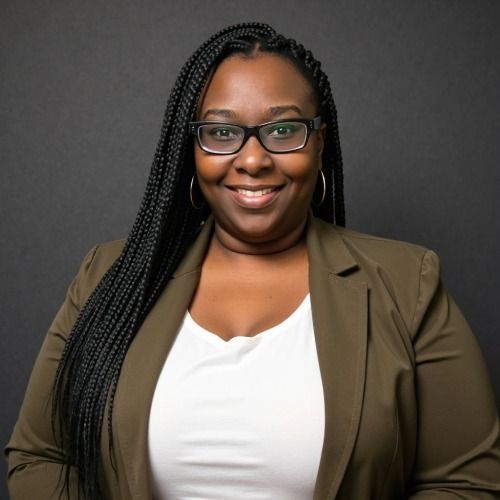
Speaker B:My name is Dr. Reba and this is somewhat Functional. This is the podcast for anyone whose brains do the most. Even when you're out here trying to do your best.
I'm a neurodivergent black woman, educator and mother of three. I'm just trying to stay focused, stay kind, and hold it all together somewhat.
This show is where we break down executive functioning, the struggle of it, how we survive it, and the stories we do not hear enough about. Let's get into it.
Speaker C:Today's episode is called Focus in this economy and honestly, same focusing right now feels like running a marathon. Before we jump in, I'm going to set the stage. Have you ever walked into a room and immediately forgot why you went in there? Yeah, all the time.
r brains are buffering like a: Speaker A:You remember the AOL dial up. You.
Speaker C:Remember notifications, group chats, noise, stress. It's a lot. Cognitive load theory says our brains have limited bandwidth. 2 Too much input, everything slows down.
I was diagnosed with ADHD in:I forget simple words that I've known all my life. I feel like I don't belong in my own family sometimes. And within black culture, there's a lot of shame and a lot of stigma behind that.
So if focusing feels impossible, you are not alone. Let's unpack why. Working memory is your brain's unreliable assistant. It means well, but it constantly loses the memo.
It's the tiny mental post it that only holds four to seven things at a time. Then when you add stress or noise, the post, it curls up and falls right off the fridge.
y way. So picture it. Sicily,:No, I'm just joking. I'm a big golden girls fan. But picture this. You sit down at your desk feeling good.
Your to do list looking all cute, got your coffee just the right temperature. And then the email comes in. A passive aggressive email from one of your co Workers. Throw the whole computer away. I'm done.
Your heart is racing, your brain is racing and anything that you thought you was about to sit down to do, that's not happening. That's emotional interference. It's a real thing. Your brain cannot hold high emotion and high level thinking at the same time.
Speaker A:I can't make that up. That's the research.
Speaker C:Today's guest knows this world personally and professionally. I would like to introduce you to Crystal Morgan. Crystal Morgan is a certified neuroscience based life coach with a master's in counseling.
She works specifically with adults and teens with adhd. As well as living this journey in her own life. She brings science and lived experience to the table.
And I cannot wait for you to hear this conversation.
Speaker A:So I want to start off by saying thank you.
Speaker C:Thank you for being here.
Speaker A:You are welcome and appreciated. This conversation is meant to be relaxed. You speak your mind and that's what I want.
I am going to ask some questions about diversity and things like that because I really want to highlight the intersectionality between. Different minds and race and culture origin and all of that.
Speaker D:So. My name is Crystal Morgan and I currently have my own life coaching business and I specialize specifically in people with adhd.
I utilize positive psychology coaching and neuroscience coaching. I have, I am very passionate about helping people that are stuck because I myself have ADHD and I have a kind of an interesting story.
I'm so passionate about ADHD because this is something I have lived with my whole life. And I. So I'm 51 years old and I believe I was diagnosed from what my parents have told me when I was in the fourth grade. I did not know though.
They chose not to tell me. And I was re diagnosed in my 30s. After having children and literally putting ice cream in the freezer.
I mean ice cream in the cabinet and my keys in the freezer and forgetting to pick up my kids. And my husband at the time was just very much getting frustrated with me because I was losing everything. I could not focus. It was bad.
So then I got diagnosed with it and I. Called my mom and I was like, mom, you're not going to believe this. I have adhd. And she's like, oh yeah, you've always had that.
You were diagnosed in fourth grade. And I'm like, what? And so I was actually kind of frustrated because I'm going to go back now to my childhood where I'm going to tell you I was.
I have the. I have extra H, I have extra hyper, right? Could not stay in my seat, running around all the time, talky, talky, talky, touchy, touchy, touchy.
And I had a really hard time, you know, keeping friendships and connections because I was too much. Right. And then I have this other thing going on where I was, like, a voracious reader. I love to read, and I loved certain things.
And by the time I was in sixth grade, I'd read through every single book in the library. But certain subject matter, if I wasn't invested or interested in it, I could not comprehend it.
This created this problem for me because then I start, like, getting into these subjects, like math and, well, basically all the subjects, unless, you know, it was like, art or dance or music. And then all of a sudden, I feel stupid and I'm dumb. And then I start to develop this fear complex that there really is something wrong with me.
When I'm. And I start comparing myself to their kids, I'm like, I don't understand why I don't understand.
And I would put all of this focus trying to understand, and yet I could not get it. And this started to increase this. This insecurity in my ability to comprehend and to kind of navigate these difficult subjects and school in general.
Well, then fast forward. So backing up a little bit. I will say this. I'm a little quirky. I think a lot of us are. But I had this. A couple of really cool things going for me.
Number one, I don't know why, but I was born with this ability to know that I am worthy. And it's the only way I can describe it, but I knew that I came from something special. I knew that I was worthy of love.
And something in my brain was telling me, you're awesome. You got this. I know that this isn't working for you, but you still have value. Now, I know for a lot of women that that isn't true. And it was a gift.
I'm just going to call it a gift. Yeah, I still had setbacks.
I still felt stupid, but I had this core value that I was lovable and worthy of love and accept and that somehow I was going to be okay. Yes. So moving on into high school, I started to pick up on some really key factors where I'm like, you know what?
I see the way these people are behaving and things are working for them. So now I'm going to mimic kind of what they're doing, and I'm hoping that I'm going to find some success with that.
And I think that is something that a lot of kids pick up at a younger Age. But people that are neurodivergent, it takes them a little bit longer to pick up on some of that stuff. Right.
Speaker A:I. And I also think. And it's funny that you say that because my son, he's more of the. The A. Yeah. Capital A. Like he's a space cadet.
And I think in that way he is less aware of like perception.
Speaker D:Right. Time loses all meat. Right. But they might be more quiet about it. They're just sitting there calmly going through life, but everything is.
They look like they're being attentive. Yes, but they're not.
Speaker C:Yes.
Speaker D:So. But also that's something we hypers can do too, is we can look at people and we can pretend like we're listening. And I. You got so good at it.
I can throw back words at people and you think I'm listening to you. And if it's not interesting to me, I'm not really. I'm not. I'm listening, but it's not soaking in. And. And I'm not comprehending it. Right here.
Speaker C:You.
Speaker D:Yes. Right. Right.
So the key thing that happened though in high school was that I started to see there was something else in me that I wanted to be successful because I grew up in a family where my parents, they were very loving. And my mom started to see, you know what? I'm going to keep this kid busy so she'll stay out of trouble. So I can do a little bit of everything.
I mean, I can do a little banjo, guitar clog, tap dance, art, drama, you know, just all these really random things, but I'm not really great at any of them.
But I think I started to see that I wanted to be successful because my family always struggled financially and it was very stressful growing up and I didn't want to be like that. And my dad, just like you had adhd and so he would go from job to job to job and he could just not hone in. And so we were always getting.
Having to move and we were in apartments and we were just. We were all over the place. So I was like, I'm going to make friends. So that, that saying, show me your friends and I'll show you your future. Right.
It's impactful because I started to align myself with people that were successful and I would push myself harder because I did not want to be the dumb one in the group.
And I think with the, with my hyperactivity, my realization of aligning myself with successful and productive people and then just that will to just want more for myself. I Just kept pushing and pushing and pushing. And there were key things that happened along the way, I think that made a big difference. And it was.
My mom would body double me. I didn't realize that that was the term back then, but she was always just sit by me and hone me back in. She got me through my bachelor's degree.
Speaker A:Just.
Speaker D:She's like, sit down. Let's get this done. We get you focused, right?
Speaker A:Yeah.
Speaker D:And then by the time I had my master's degree in counseling, I was so passionate about it that I loved it. And I absorbed everything from that, and I got straight A's.
Speaker A:Yeah.
Speaker D:But I had many failed grades in junior high and high school and had to re. And even in my bachelor's degree, I had to retake several classes.
And I always had that little thing inside me thinking that I'm stupid or I'm just not smart enough. And then as an adult when I was diagnosed and I finally understood, I'm, like, brilliant. And if I had had right.
Like, if I had had the right people, like, if I'd had the right information and perhaps the right guidance, I might be a brain surgeon right now. Right. You know, so that's kind of my story. And it just.
And that's why it kind of led me into counseling and just having other family members that have it, me having it. I just. I just have this.
All this love and passion and connection, and I love people's stories, and I love giving people tools that I have found and that I research and find. And I love the fact that our brains have plasticity and we can continue to grow and develop our entire lives.
And I found that my biggest and truest gift is connecting with other people and holding space with them and listening and being empathic and loving and just getting all that yummy good energy and being able to help them see their authenticity and help them find their values and their path in life, whatever that looks like. So, yeah, that's kind of my little story.
Speaker A:Well, it's a beautiful story. And there are so many parts of it that I could speak to. Truly. There was something that you said, and there goes that working memory again.
Speaker D:I'm with you. You're all. You're all good.
Speaker A:Yes, I think that we are. And I've heard this before.
Speaker C:People that are neurodiverse are. They have superpowers, for sure.
Speaker A:And more people have. The executive dysfunctions than we think. They just don't know what it is.
Speaker C:Yeah.
Speaker A:Because like you said, you felt. You were saying you felt like you Were not smart. And it's really that. And I feel that as an adult.
Speaker C:I get the imposter syndrome.
Speaker A:I don't belong because I'm not smart enough. Even though I have all these years of school, you know, I've always done well. Even now with all of that.
There are times in my life, days where I'm like, I feel like I am just an idiot. I just feel like I do not belong in my space. And another thing that you said that I struggle with is that anxiety.
Speaker C:That.
Speaker A:Constant worry or the, the other end is the depression. I get tired. Like some days I feel like I.
Speaker C:Can'T even, I don't even want to.
Speaker D:Get out of the bed.
Speaker A: , the one who diagnosed me in: Speaker C:He was like, I have ADHD.
Speaker A:He was like, but I have a job where I make my own schedule. I have an assistant. So all those things that would typically cause him trouble, he has mitigated those because he has a nurse, he has.
Speaker C:An assistant that handles our scheduling.
Speaker A:He makes sure that he sets his schedule so that he's not late. You know, I know they keep him organized so his deficits don't show up as much.
Speaker D:Right.
Speaker A:As they would with someone who has to work in an office that has to report on time. So the context matters, right?
So with my son, I was like, when you get ready to choose your career, be mindful of like, what do you want your life to be? What do you want your life to be like?
Because if you don't want to get up every day and have to drive into work at 6am well then you need to make sure you're not looking for jobs like that. Think about a career where you can be more flexible because you know that sometimes you just need a little bit more time.
To get yourself together in the morning. And you will have that space to do that.
Speaker D:Oh, absolutely. Going back to what you're saying, like having, I call that having a security system. So, like people will set up cameras around their house, right.
To notify them of impending doom or danger. We have to do the same thing for ourselves, right? We have to set up a security system and whatever. It's going to look different for everyone.
Because even though we all have some similar symptoms, we also all have different things, right? Different skills, abilities. And speaking to the depression and the anxiety, like typically people with ADHD have coexisting disorders, right?
And so what do those look like for you? And what does depression look like for you? What does anxiety look like for you? And how do we mitigate that? So there's like all these, like.
There's all this, like, popcorn. It's like popcorn going off all around us all the time, right? Trying to figure out how do I. How do I fit in this space? And I like that you said that.
Fitting in my space, and I like to use this term, and it. Take it for what you will. But, like, you're here on Earth and you've got to fill the measure of your creation, right?
So here you are created and you gotta, like, fill up all of this time and space that you're in. And what is that gonna look like?
Because for people like us, we kind of started out in a deficit because, you know, when we were younger, there wasn't as much information about it. Although I've done some research and it has been around for a very long time. However, they just couldn't really verbalize it specifically or.
And it wasn't named this specifically, but there's just. We're usually some of the brightest and the best.
We just come across as being airheady and forgetful and not because of the way we're viewed and the way we navigate the world. Right?
Speaker A:Yes, absolutely. Absolutely.
Speaker C:Yeah.
Speaker A:Describe a time when you needed to focus or attend to something and you couldn't and it created a problem.
Speaker D:Well, let's see. Let me just get out the whole book of my life. So I would say having kids really messed with my hormones. And that's where, again, I got.
That's when I got that second diagnosis. I'm going to say that was like kind of the beginning of some big problems. It was creating problems in my marriage because my.
He's now my ex husband, but he was a very focused individual. He. I can very clearly state that man did not have adhd, but he also didn't believe in ADHD or believe that I had adhd.
And even when I got diagnosed, he just was discounting and dismissing it. But he was making me feel bad about who I was as an individual because I could not see. Stay on top of tasks. And I was doing some pretty crazy stuff.
Like I said, putting ice cream in the cabinet and CDs in the freezer and keys in the freezer. I mean, I. And I would lose things all the time. And then. Then I would have this anxiety between us because I would.
I knew he was going to get upset and frustrated with me, and I was going to let him down. And it created this cycle within me of failure and being not enough for this person and my kids. And it was very, very problematic and very stressful.
Speaker C:Wow.
Speaker A:You know, I appreciate that because I never. I feel like. Clearly that would be an issue. In the world. I truly never thought about that.
As far as relationships, I know that my niece, she has trouble. She's in third grade. She has trouble, like, keeping friends, like how you said in the beginning, because she can be. Like you said, she can be a lot.
Speaker C:She's a handful.
Speaker A:And sometimes kids are okay with that for a certain length of time. And then they're like, okay, I've had enough. You need to stop.
Speaker C:They don't want to play with her.
Speaker A:Anymore, and she can't. But I never considered, like, a marriage. Being disrupted by it.
Speaker D:Well, and. And to go back to also, because, you know, I had childhood wounds of being told, you're extra, you're too much, you're a lot.
And then to have your spouse say those things to you, very hurtful. But.
Speaker A:It'S.
Speaker D:One of the things that I do when I'm working with some of my clients, and I. I work with some teenage. But I most. My favorite is to work with teenagers and adults. But I like to specifically really hone in on that piece of the.
Of being too much, being extra. Because I want to say, first of all, I don't like that. I don't like that at all. I don't like being told I'm too much or I'm extra.
I would, however, like to say, yes, I may not be always appropriate in every situation. So I can be more mindful and I can pull myself in, because I don't think anyone should be told.
These negative things, that you're too much, you're not enough, you're over. You're overreacting, you're over this, you're over that. We are some of the most emotionally beautiful people on this planet. And I will say this.
We feel things deeply. And when there is a happy person, there is not a happier person than us.
And then when we're sad, there's not a sadder person than us and every other emotion in between. And how amazing and beautiful is that to have the gift to be able to feel all of those things so passionately?
I mean, emotions are freaking beautiful, right? They're just. They're like, I want more. Right?
So I have just flipped that script, and I work with my people, and I've worked with myself, and I say, you know what? You are enough. You are good just as you are. You have these gifts and abilities and talents.
But let's always try to hone in on what's appropriate in this situation.
Yeah, let's practice reading the room, let's practice reading the person that we're talking with so that we can learn to better maintain our friendships and relationships, that we're not overwhelming people.
Speaker A:Yeah. I think that is something that I've, I've really leaned into in the past 10 years. Just, I, I, I don't think people think I'm like overt.
I'm actually inverted. And I've, I've been told stoic.
Speaker D:Interesting.
Speaker C:Right?
Speaker D:And because were you always like that or is this.
Speaker A:I think so. I think so. Um, I can't account for it.
Speaker C:I just, I just know that I.
Speaker A:Get very annoyed.
When people are acting like when they're doing a lot, especially if I am, because I am very, I guess I've always kind of had like self esteem issues and things like that. So that also caused me to withdraw. When I have to be on, I am on, but I can't be on all the time.
Like, my social battery does drain quite quickly and then I want to retreat to be by myself. And sometimes I'm like.
Okay, Well, I remember a time when it was just a lot of confusion and in the schedule, we were planning a big conference and it was a whole bunch of, it was just a bunch of confusion and they weren't clear and they didn't, they didn't state the expectations.
They had been doing this for a couple of years, so they knew what they wanted, but they did not do a good job of making that very clear and visible to everyone else. So when I wasn't where I was supposed to be, you know, they tried to be like, well, tell me what happened.
And I'm like, what do you mean, what happened? Well, why didn't you book your flight earlier? Did you tell me to book my flight earlier?
Like, you didn't tell me that I should, you told me to book a flight, you know, and, and I'm like. Okay, what are you asking me? And she's annoyed with me because she's like, I need you to talk to me.
And you're, you're being very stoic and I'm, I'm just like, I'm answering your question. I don't know, I don't have like some elaborate discussion or, you know, I booked the flight, when I booked the flight. I can't tell you anything more.
And so me being like Responding in that way, it seems like I have an attitude and in some ways maybe I do, but in other ways it's like I don't. You're not opening the dialogue for us to be, for us to have a successful conversation. You're. But you're blaming me for it.
Speaker D:Can I, can I ask, this is curious, like this whole conversation that you said. I, what I hear you saying in my ADHD speak is. I have been, I am coming from a place of protection because I don't pick up on the things.
I need things to literally be spelled out for me. I need, I need a syllabus, basically a step by step syllabus for what you need and want me to do.
Because if you leave me to my imagination, some of us are very like, I will go all over the place and make a really pretty rainbow, unicorn, poop and ice cream kind of scenario. And others of us with ADHD will just shut down. This is where we just. Executive function shutdown. We're like, you know what? I'm.
If I don't clearly understand the guidelines and the procedures and interestingly enough, and I, I can't speak for you, but I know that a lot of people that I've worked with, it comes from a core wound of being of that same thing, of feeling inadequate because we don't understand the assignment and we don't want to ask because we're afraid we're going to get ridiculed because often we've been like, what don't you understand about this? It's very simple. But it's not simple to us. Right?
Speaker A:It's simple in your mind.
Speaker D:Yes. Yeah. And so then we do maybe get a little defensive because we feel misunderstood. And going back to that core wound of am I dumb? Am I stupid?
Do I not understand? Why does everyone else understand? Why don't I understand? So I totally get that. Been there and done that in various ways. So. Yeah.
Speaker A:And it's, it's, it's rough. Yes. Do you think that your cultural or family background influenced how you thought you should behave?
I have a Caribbean background, so it very much is like, oh, you're lazy, you know, or you, you know, you don't want to do anything.
Speaker D:I hear that. I think that every culture has its expectations. And I grew up, There is some cultural reference, so I grew up Mormon.
And I don't know if you're at all familiar with that, but it is a very. It'S very steeped in culture. And there's, that's a topic for a Whole nother day.
But ultimately, and to be full disclosure, I'm no longer practicing Mormon, but I grew up with it, and all my family is Mormon, and I love them dearly and I honor and respect their beliefs and practices. Um, but for me, growing up, I would say, in general, Mormon families are taught to be highly educated and they are well behaved.
Like, church was three hours when I was growing up, that you had to sit and be. Be a good girl for three hours. So when I was just a very young little child, I was raised to sit and be quiet, but I couldn't.
And I was frequently getting in trouble.
Speaker A:Yeah.
Speaker D:And the authority figures in the church were coming down on my parents for me being so disruptive. And other members would, you know, because I just could not sit and listen to boring things for three hours. I was a little kid.
Speaker A:Yeah.
Speaker D:And then I also have a feistiness in me. Right. And I question everything. Everything doesn't make sense. And so I would fight back. And it's a patriarchal religion. Right.
Women didn't speak up so. So much. And I'm speaking from my experience, but, I mean, women hold some leadership positions in the Mormon Church, but you can't be the prophet.
You can't be the bishop of a. Of a, you know, an area. So it's a very male religion. And so between those two things, I think that it really.
I also was feeling inadequate and even so much that I ended up not just because of that.
I, you know, I didn't believe with a lot of the beliefs and practices, but part of the reason that I exited the religion was it just wasn't a good fit for me. If you are different and don't fit into a certain mold, it's not really a safe space for you to practice spirituality.
Speaker A:Yeah.
Speaker D:So, yeah.
Speaker A:Yeah. No one wants to spend time listening to someone tell them how they should change.
Speaker D:Yeah.
Speaker A:Especially when you cannot. I mean, if we could do it, we might. We might indulge if we actually had the ability to do so, but we can't. So, I mean, why are we fighting.
Speaker D:Our brain and going back to that working memory piece, too? Just, there's certain pieces and, you know, I have a. I think I've got, like, a math learning disability.
I can't remember if I was diagnosed with it, but to this day, I cannot tell you my times tables. There's just certain things that don't line up for me. I mean, I have a master's degree and I cannot tell you all the times tables.
And I still use my Fingers to count sometimes, you know, because there are math deficits there. Right.
But I'm highly intelligent in other areas and I can remember certain things, like, you wouldn't believe it, but other things, I can't tell you anything. So, you know. Yeah. Strengths and weaknesses.
Speaker A:You're not alone. You're not alone. What did you learn about yourself from just this conversation? Did anything come up?
Speaker D:I love meeting with other adult women that have. I get so this is like, I'm an energy person.
And, like, even though I see you here across from me in a video chat, I feel this beautiful energy that you have.
And we have similar energy in some way and different energy in other ways, but it's so validating and it just feels so warm and comforting to be around other people that understand, that can relate with you. They get the narrative, they get the situations, and it reminds me that I'm not alone. Right.
And even though I work with people in this arena, it's still just nice to have conversations and be just vulnerable and say, yeah, it's been rough, but it's good too. But it's rough. It's the high and easy road. Oh, yeah, I totally agree.
Speaker C:Crystal, I want to thank you so much for this. Your story highlights something that often gets overlooked. Not just the neuroscience, not just the.
Speaker A:Tools, but the identity piece, the cultural.
Speaker C:Layers that really shape how our struggles are interpreted. So many neurodivergent adults, especially women, grow up thinking that they're useless, lazy, dramatic, inconsistent, too much.
Speaker A:When the truth is we just need.
Speaker C:Structure, clarity, and support.
Speaker B:That's it for today's episode of Somewhat Functional. If this hit home, subscribe, leave a review, and please send it to someone who needs it. You never know who's out there feeling alone.
Let's remind them that they're not. And listen, if you have a story or a strategy or a meltdown moment that you want to share and you think it belongs on this show, hit me up.
You can reach me at Dr. Rebaomewhat Functional.com. take what you need, rest when you can, and remember, you are more functional than you think.
And hey, my brain won't let me be great, but that ain't stopped me yet. Thanks for rocking with me and I'll see you in the next episode.